
Hamilton residents still dealing with this summer's flooding may have another place to look for help.
The City has introduced a one-time compassionate grant of up to $2,000 for eligible homeowners and tenants affected by flooding from the July 21, July 28, August 2 and August 7 rainstorms. The amount available is based on the lowest of $2,000, the applicant's insurance deductible, or their actual eligible expenses. It covers eligible flood-related costs that insurance did not pay, including cleanup, repairs, essential household items, emergency expenses and insurance deductibles.
Homeowners and tenants can claim different things. Homeowners may claim eligible cleanup, restoration, repair and replacement costs for their principal residence. Tenants may claim eligible damaged household contents, since structural repairs remain the property owner's responsibility.
That is worth knowing on its own. It also points to something we see often after a loss. Several people are suddenly involved, and it is not always clear who should answer which question.
"Is this covered?"
This is one of the most common questions a restoration contractor hears. It is also one we should be careful answering.
A restoration company can tell you what damage was found, what work looks necessary, and what is included in its estimate.
Your insurer or adjuster is the one who explains your policy: what is covered, what is not, and what deductible applies.
A simple way to remember it:
Your contractor explains the damage. Your insurance representative explains the policy.
"When will I meet my adjuster?"
You may not.
Having an adjuster on your claim does not always mean someone comes to your door. Depending on the claim, the adjuster may work from photos, reports and estimates, or an in-person inspection may be arranged.
A better question is:
Who is handling my claim, how do they want the damage documented, and what happens next?
The Insurance Bureau of Canada notes that once a claim is filed, a claims specialist or adjuster will review the circumstances and documentation and explain the next steps.
"Can I throw this out?"
Not yet.
When it is safe to do so, photograph damaged items and write down what you had. The Insurance Bureau of Canada recommends keeping damaged property unless it is dangerous or presents a health hazard, and checking with your insurer before getting rid of anything.
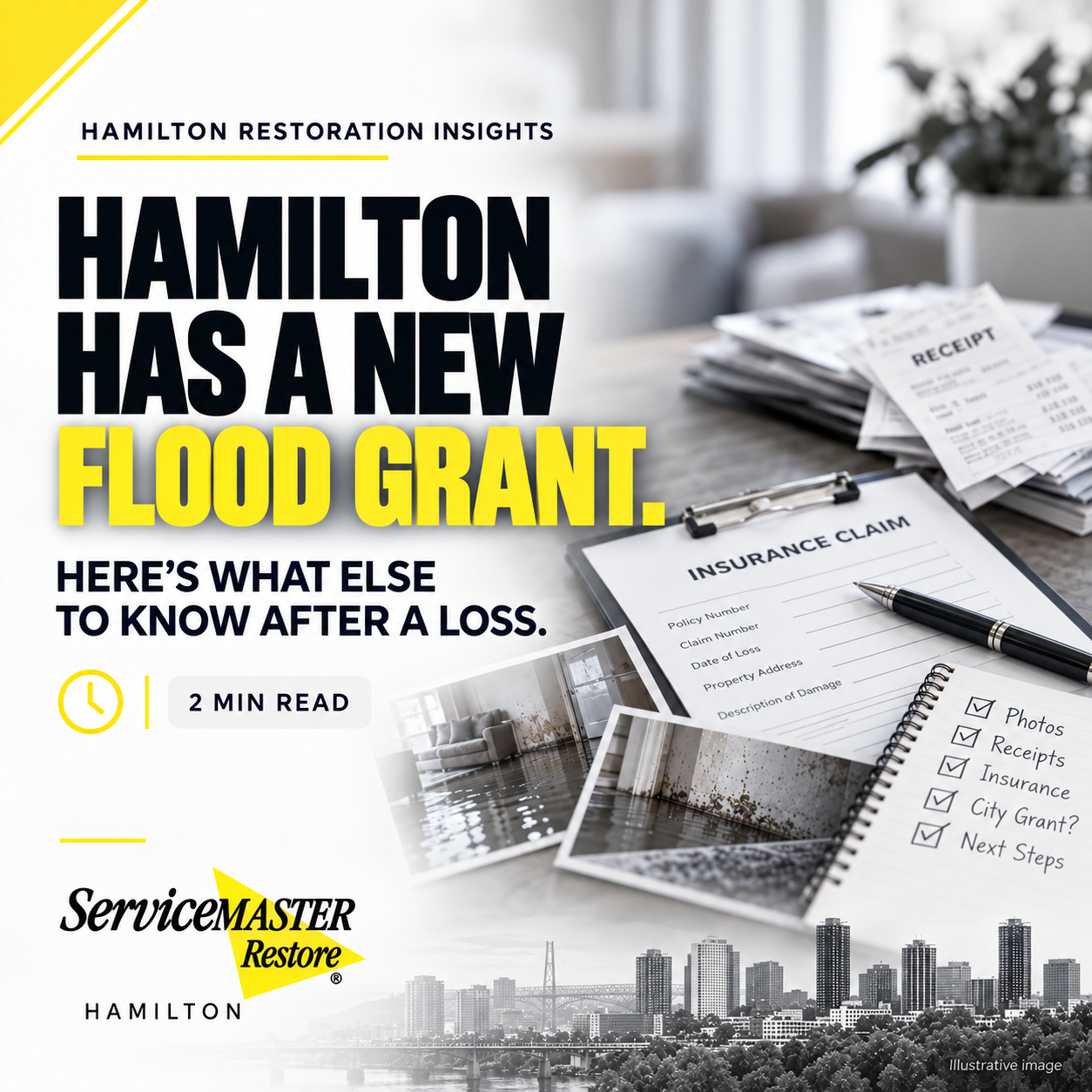
This matters more than usual right now. Applying for the City's grant means showing what you spent and what you lost, so receipts, invoices and photos are worth keeping.
Document first. Dispose second, unless safety says otherwise.
"Can I start fixing things?"
There is a difference between stopping further damage and starting permanent repairs.
Insurance policies generally expect you to take reasonable steps to prevent more damage. So if water is still coming in and you can safely stop it, stop it.
But before wet materials disappear, take photos, keep records and speak with the people handling your claim.
"Insurance didn't cover everything. Is that it?"
Not necessarily.
That is the point of the City's new grant.
It is intended for eligible flood-related costs that were not covered by insurance, and the City specifically includes eligible insurance deductibles.
If you were affected, watch the deadline
Each storm has its own cut-off:
- July 21 storm: November 21, 2026
- July 28 storm: November 28, 2026
- August 2 storm: December 2, 2026
- August 7 storm: December 7, 2026
If more than one storm affected your property, check which date applies to your application. And keep the receipts, because the City asks for supporting documents.
Applications are being administered on the City's behalf through Sedgwick Canada Inc. Full eligibility details and application instructions are available on the City of Hamilton's compassionate grant page.
Know who to ask
After a loss, it can feel like everyone is talking about the same thing.
They are not.
The contractor is looking at the property and the work.
The adjuster is assessing the claim.
The insurer is applying the policy.
The City is running its own grant program.
And you are trying to keep all of it straight.
The common mistake is not asking the wrong question.
It is asking the right question of the wrong person.
Hamilton Restoration Insights
What’s happening in our city, through a restoration lens.
A weekly series from ServiceMaster Restore of Hamilton.