
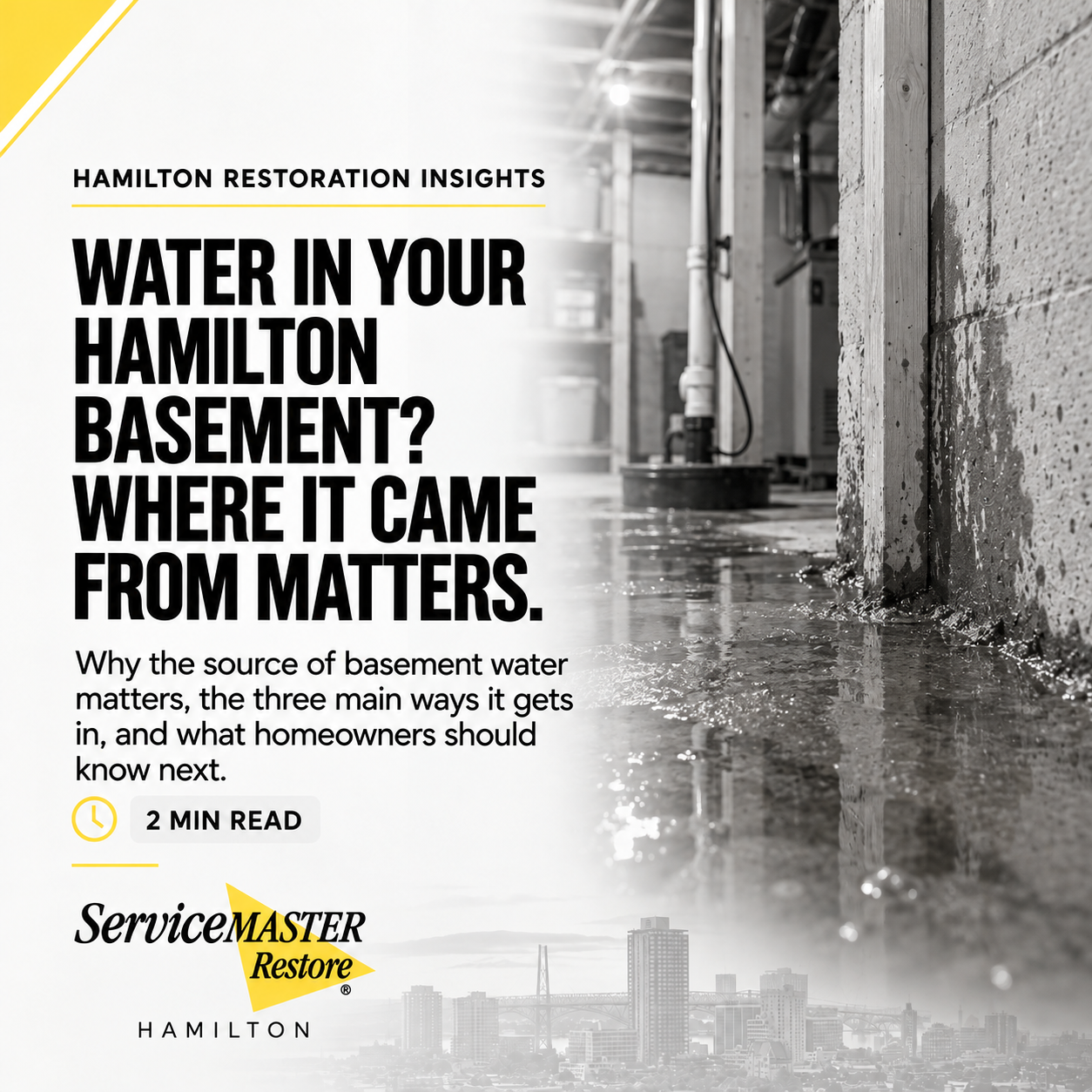
When water shows up in a basement, the first instinct is to get rid of it. That’s reasonable. But before it goes, it’s worth asking where it came from, because the answer shapes nearly everything that follows.
Not all basement flooding happens the same way.
Three ways water can enter your basement
According to the City of Hamilton, basement flooding generally falls into three categories.
1. Sewer backup
Water coming up through a floor drain, toilet or other basement plumbing fixture usually indicates a sewer backup. This can happen when the municipal sewer system becomes overwhelmed, or when a property’s sewer lateral is blocked or damaged.
Because sewage may be present, the water should be treated as potentially contaminated until properly assessed.
2. Overland flooding
Sometimes water enters from outside, through basement windows, doors, window wells or other openings.
Heavy rainfall, poor grading or drainage problems can direct water toward the foundation rather than away from it.
3. Groundwater infiltration
Water can also enter through cracks in basement walls or floors when the surrounding soil becomes saturated or groundwater levels rise.
Unlike a sudden sewer backup, infiltration may appear as damp patches, seepage or water collecting along a foundation wall.
Why the difference matters
The source of the water influences what happens next.
A sewer backup will require contamination controls and specialized cleaning. Groundwater infiltration may call for an investigation of foundation conditions and drainage. Overland flooding may point to problems with grading, window wells or surface runoff.
Identifying the source also matters when documenting damage and discussing insurance coverage. Different policies and endorsements may treat different causes of flooding differently.
And as we covered last week, removing visible water is only part of the job. Understanding how it entered the property helps determine what needs to be repaired and how future incidents might be prevented.
What Hamilton homeowners can do
The City recommends several practical measures, including keeping eavestroughs clear, directing downspouts away from foundations, maintaining proper lot grading and considering protective plumbing improvements.
Hamilton also offers a Protective Plumbing Program, including grants of up to $2,000 for eligible improvements.
If your basement floods, avoid entering standing water where electrical hazards may be present. If sewage contamination is suspected, avoid contact and arrange professional assessment.
The bigger picture
Basement flooding can look similar on the surface, even when the underlying causes are very different.
For Hamilton homeowners, understanding those differences can help guide the immediate response, conversations with insurers and decisions about preventing future damage.
Because knowing where the water came from is just as important as knowing how to remove it.
Hamilton Restoration Insights
What’s happening in our city, through a restoration lens.
A weekly series from ServiceMaster Restore of Hamilton.